Titanium Cutting Board Pros and Cons is a topic I kept seeing pop up everywhere—especially with “modern kitchen” and “2026 kitchen trends” videos flooding my feed. I’ll be honest: when I first heard about titanium cutting boards, I was curious but also very skeptical.
A cutting board made of metal? For daily cooking?
So I decided to dig deep, test, observe real-world usage, and break everything down in a simple, honest way. In this article, I’ll walk you through exactly what a titanium cutting board is, why people are talking about it in Titanium Cutting Board 2026 trends, and most importantly, whether it actually makes sense for an everyday kitchen.
If you’re wondering whether a titanium cutting board is a smart upgrade or just another internet hype product, this guide is for you.
What Is a Titanium Cutting Board?
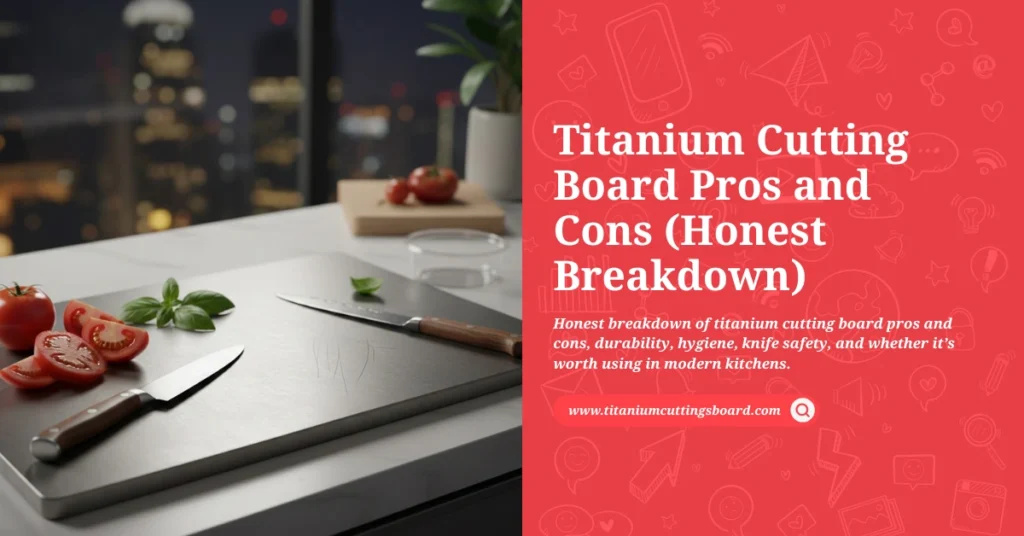
A titanium cutting board is exactly what it sounds like a cutting surface made from titanium or a titanium alloy instead of wood, plastic, or bamboo.
Unlike stainless steel boards (which have existed for years), titanium boards are marketed as:
- Ultra-durable
- Rust-resistant
- Non-porous
- Long-lasting
- More “knife-friendly” than steel
Most titanium cutting boards are thin, flat, and minimalist in design. Many are advertised as antibacterial and easy to clean, which is one reason they’re becoming popular in modern kitchens.
Why Titanium Cutting Boards Are Trending in 2026
The rise of Titanium Cutting Board 2026 searches isn’t random. A few clear trends are driving interest:
- People want low-maintenance kitchen tools
- Concerns about bacteria in wooden boards
- Interest in modern, minimalist kitchens
- Viral videos showing “easy cleaning” demos
- Long-term durability over frequent replacement
From what I’ve seen, titanium cutting boards appeal more to people who value cleanliness, durability, and aesthetics rather than the traditional cooking feel.
Titanium Cutting Board Pros and Cons (Quick Overview)
Before we go deep, here’s a simple snapshot.
Pros
- Extremely durable
- Non-porous and hygienic
- Easy to clean
- Doesn’t absorb smells or stains
- Rust and corrosion resistant
Cons
- Can dull knives over time
- Slippery surface for certain foods
- Hard and noisy when cutting
- Expensive compared to plastic or wood
- Not ideal for all cooking styles
Now, let’s break each of these down properly.
Pros of Titanium Cutting Boards
1. Extremely Durable and Long-Lasting
One thing I can confidently say: titanium cutting boards are tough.
They don’t crack, warp, or split like wood. They don’t bend or degrade like plastic. If you’re tired of replacing cutting boards every year, this is a big advantage.
For someone who wants a one-time purchase that lasts for years, titanium clearly stands out.
2. Non-Porous and Hygienic
This is one of the biggest reasons people switch.
Because titanium is non-porous:
- It doesn’t absorb water
- It doesn’t trap food particles
- It doesn’t hold smells from onions, fish, or garlic
From a hygiene perspective, this feels reassuring especially if you handle raw meat or seafood often.
3. Very Easy to Clean
Cleaning a titanium cutting board is straightforward:
- Rinse with water
- Wipe with a sponge
- Done
No soaking. No scrubbing. No waiting for it to dry completely.
For busy kitchens or people who hate cleanup, this is a huge plus.
4. Rust and Corrosion Resistant
Unlike some metals, titanium does not rust easily.
You can leave it wet without worrying. You don’t need special oils or maintenance routines. This makes it ideal for humid climates and everyday use.
5. Modern and Minimal Look
I won’t lie titanium cutting boards look sleek.
If you like a clean, modern kitchen aesthetic, this board fits right in. Many people even leave it on the countertop as part of their kitchen setup.
Cons of Titanium Cutting Boards
Now let’s talk about the downsides because they matter.
1. Can Dull Knives Faster
This is the biggest concern, and it’s real.
Titanium is harder than wood or plastic. Over time, repeated cutting can dull knife edges faster, especially if you use softer steel knives.
If you invest in good knives and hate sharpening them often, this is something you must consider.
2. Slippery Surface for Some Foods
When cutting items like:
- Tomatoes
- Herbs
- Soft fruits
the surface can feel slippery compared to wood. There’s less “grip,” which may affect precision for some users.
3. Hard and Noisy While Cutting
Cutting on titanium feels different.
You’ll hear more sound compared to wood. The hard surface also feels less forgiving on the hands during long prep sessions.
If you cook for long hours, this may become uncomfortable.
4. Higher Price Than Traditional Boards
Titanium cutting boards are not cheap.
Compared to:
- Plastic boards
- Bamboo boards
- Wooden boards
the price is noticeably higher. For many kitchens, this cost may not feel justified.
5. Not Ideal for Traditional Cooking Styles
If you enjoy:
- Heavy chopping
- Rocking knife techniques
- Traditional prep methods
titanium may feel unnatural. It’s better suited for light prep rather than intensive cutting.
Titanium vs Other Cutting Board Materials
Here’s a simple comparison to help you decide.
| Material | Durability | Knife-Friendly | Hygiene | Maintenance |
|---|---|---|---|---|
| Titanium | Very High | Low–Medium | Very High | Very Low |
| Wood | Medium | High | Medium | High |
| Plastic | Low–Medium | Medium | Medium | Medium |
| Bamboo | Medium | High | Medium | Medium |
From my experience, titanium wins on hygiene and durability but loses on knife care and comfort.
My Experience-Based Insights
After observing real kitchen use, here’s what I learned:
- Titanium works best as a secondary cutting board
- It’s excellent for raw meat and fish
- Not ideal as the only board in a kitchen
- Knife quality matters more with titanium
- It suits minimalist, low-effort kitchens
What worked well:
- Hygiene
- Easy cleaning
- Durability
What didn’t:
- Knife wear
- Comfort for long prep
This balance is important to understand before buying.
Who Should Buy a Titanium Cutting Board?
A titanium cutting board may be right for you if:
- You value hygiene over tradition
- You want low maintenance
- You prefer modern kitchen tools
- You don’t mind sharpening knives more often
Who Should Avoid It?
You may want to skip titanium if:
- You use expensive knives daily
- You cook for long hours
- You prefer traditional chopping feel
- You want a soft, quiet cutting surface
Frequently Asked Questions (FAQ)
Is a titanium cutting board safe for knives?
It’s safe, but it can dull knives faster than wood or bamboo. Regular sharpening is recommended.
Are titanium cutting boards better than wooden ones?
They are more hygienic and durable, but wooden boards are better for knife care and comfort.
Can I use a titanium cutting board for meat?
Yes. This is actually one of its best use cases due to easy cleaning and non-porous surface.
Do titanium cutting boards scratch?
Yes, surface scratches can appear over time, but they don’t affect functionality.
Is a titanium cutting board worth it in 2026?
For specific use cases and modern kitchens, yes. As a one-board solution, not always.
Final Verdict: Titanium Cutting Board Pros and Cons
After carefully looking at all Titanium Cutting Board Pros and Cons, my honest conclusion is this:
A titanium cutting board is not a replacement for all cutting boards, but it can be a powerful addition to the right kitchen.
If you want:
- Hygiene
- Durability
- Easy cleaning
- Modern design
then titanium makes sense.
But if you care deeply about knife longevity and traditional cooking feel, pairing it with a wooden board is a smarter approach.
My recommendation:
Use a titanium cutting board as a specialized tool not your only one.
If you’re considering upgrading your kitchen setup in 2026, understanding these pros and cons will help you make the right decision with confidence.