If you’ve ever stood in your kitchen, knife in hand, wondering which cutting board truly deserves a spot on your counter, you’re not alone. Choosing the right board isn’t just about looks; it’s about hygiene, durability, weight, and how it feels beneath your knife.
Over the years, I’ve used almost every type of cutting board out there, from traditional bamboo and sturdy plastic to sleek stainless steel. But recently, titanium cutting boards have caught my attention. And for good reason. They’re strong, ultra-light, and designed for both everyday cooking and outdoor adventures.
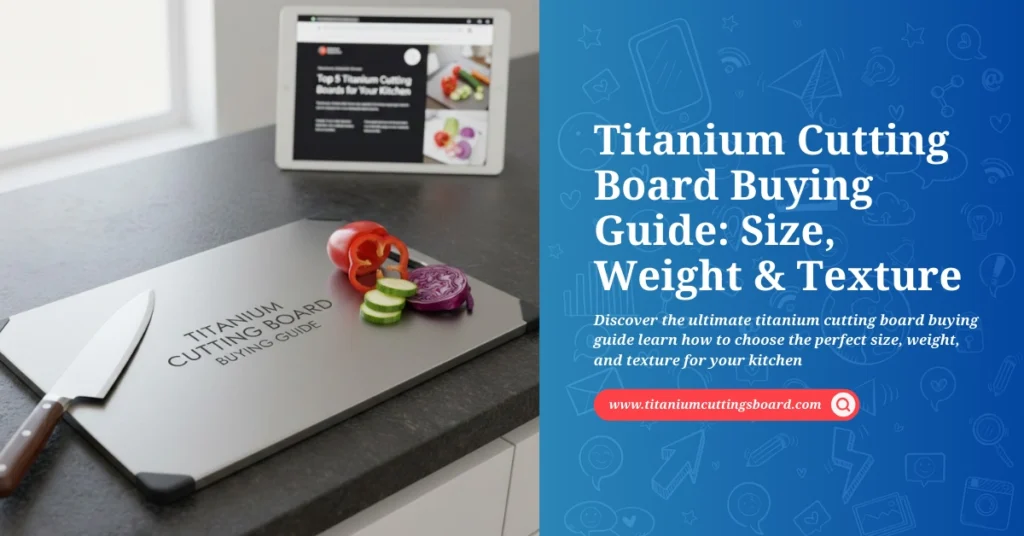
In this titanium cutting board buying guide, we’ll explore how to choose the right one for your lifestyle, focusing on size, weight, and texture while comparing titanium boards with other popular materials.
Why Titanium?
Let’s start with the big question: why should anyone choose titanium?
Titanium is known for its lightweight strength, the same quality that makes it a favorite in aerospace and medical tools. Now imagine that same level of engineering precision in your kitchen. Titanium cutting boards are resistant to rust, bacteria, and warping. Unlike wooden boards that absorb moisture or plastic ones that develop knife grooves, titanium stays clean, smooth, and safe.
What makes titanium stand out is how minimalist yet powerful it feels. It’s the kind of board that a modern chef or camper would pack, sleek, durable, and ready for anything.
While bamboo boards offer a warm, natural look and plastic boards are affordable, they both have limits. Bamboo needs oiling to stay in good shape, and plastic eventually becomes a knife-scarred mess. Titanium boards, on the other hand, require almost no maintenance and last for years.
If you’re a traveler, a van-lifer, or someone who loves the clean aesthetic of modern kitchen tools, titanium just makes sense.
Choosing the Right Size
When it comes to cutting boards, size really matters. The right size can make food prep smooth and efficient or completely frustrating.
Titanium cutting boards come in a range of sizes, from compact 8-inch models to large 16-inch versions. But your perfect size depends on where and how you cook.
If you cook at home for a family, a medium-to-large board (12–16 inches) is ideal. It gives you enough space to chop veggies, slice meat, and even serve cheese and snacks. Titanium’s rigid structure ensures that even large boards remain stable without being bulky.
On the other hand, if you’re an outdoor enthusiast, space and weight matter more than size. A small titanium board (8–10 inches) is perfect for van kitchens, hiking trips, or camping stoves. It fits easily into a backpack, wipes clean in seconds, and won’t add unnecessary weight.
Here’s something I learned the hard way: oversized boards can be a pain to clean or store, especially in small kitchens. But too small, and you’ll end up juggling your ingredients. So, when choosing a titanium cutting board, think about your available space, typical meal prep, and portability needs.
Understanding Weight
One of the biggest selling points of titanium is its feather-light feel without sacrificing toughness.
Compared to stainless steel boards, titanium ones are roughly 40% lighter, making them incredibly easy to move, wash, and carry. If you’ve ever tried handling a heavy metal board after rinsing it, you’ll know how much of a difference a few hundred grams can make.
For home cooks, that lightweight nature means you can easily slide the board around the counter or lift it to pour chopped ingredients into a pan. For travelers, it means less pack weight and more freedom.
However, not all titanium boards weigh the same. Thickness and design influence the feel. A thinner titanium sheet (around 1.5–2mm thick) is perfect for campers, while thicker boards (3–5mm) offer better stability for home kitchens.
Here’s a tip from experience: choose a board that’s light enough to handle comfortably but thick enough to stay steady when you’re chopping tougher ingredients. A slightly heavier board gives a more solid cutting experience, while ultra-thin ones are best for portability.
Texture and Surface Feel
Texture is one of those subtle details that you don’t think about until you start cutting. It affects knife performance, comfort, and safety.
Titanium cutting boards typically come in two surface types: matte and polished.
A matte finish offers a soft, slightly rough surface that gives your knife a better grip, reducing the chances of slipping ideal for precision cutting. A polished surface, on the other hand, is smoother and more elegant, perfect for serving food or quick prep work, though it may feel a bit slippery when wet.
Now, there’s a myth that metal cutting boards dull knives quickly. That’s true for hard stainless steel, but not so much for titanium. Its micro-textured surface is gentle on knife edges, offering a controlled cut without causing premature dullness.
And here’s where titanium’s hygienic advantage shines: its non-porous nature means no juice or bacteria seeps in, unlike bamboo or plastic. A quick rinse, and it’s as clean as new.
If you cook fish, meat, or anything raw, titanium’s easy-to-clean surface gives peace of mind. Plus, it dries in seconds, no waiting around for a damp board to air out.
Comparing Titanium to Other Materials
Let’s quickly see how titanium compares to its common competitors:
| Material | Durability | Weight | Maintenance | Hygiene | Knife Safety |
|---|---|---|---|---|---|
| Titanium | Excellent | Very Light | Very Low | Excellent | Good |
| Bamboo | Good | Light | Moderate | Moderate | Excellent |
| Plastic | Fair | Light | Moderate | Fair | Good |
| Stainless Steel | Excellent | Heavy | Low | Excellent | Poor |
Titanium sits in a sweet spot combining the best of stainless steel’s durability with bamboo’s lightness. It’s not perfect, of course. It can be more expensive upfront, and its sleek feel isn’t as “warm” as wooden boards. But when you consider the long lifespan, hygiene, and travel convenience, titanium quickly becomes worth the investment.
For eco-conscious buyers, titanium is also fully recyclable and long-lasting, unlike plastics that end up in landfills.
Care and Maintenance Tips
One of the nicest things about titanium cutting boards is that they’re effortlessly low-maintenance. But to keep them looking their best, a little care goes a long way.
- Clean immediately after use. Just rinse with mild soap and water, no soaking needed.
- Avoid abrasive sponges. A soft cloth or brush is enough to remove food residue.
- Dry thoroughly. Titanium doesn’t rust, but drying helps maintain its clean, spotless finish.
- Store smartly. If you travel, wrap it in a soft cloth or sleeve to prevent scratches from other gear.
With these simple steps, a good titanium cutting board can last decades, easily outliving most wooden or plastic options.
Final Thoughts
After years of experimenting with different boards, I’ve found that titanium is not just another “trendy” material; it’s a serious upgrade for modern kitchens and outdoor cooking setups alike.
If you love clean design, lightweight tools, and long-lasting performance, a titanium cutting board might be exactly what you’ve been looking for. It’s sleek, sanitary, and dependable whether you’re slicing fruit in your home kitchen or prepping dinner by a campfire.
In short: think about your space, cooking habits, and comfort before buying. Once you find the right size, weight, and texture, your titanium cutting board won’t just be another kitchen tool, it’ll be a part of your cooking rhythm.